The cost of importing a car from Germany in 2026 — what goes into the price
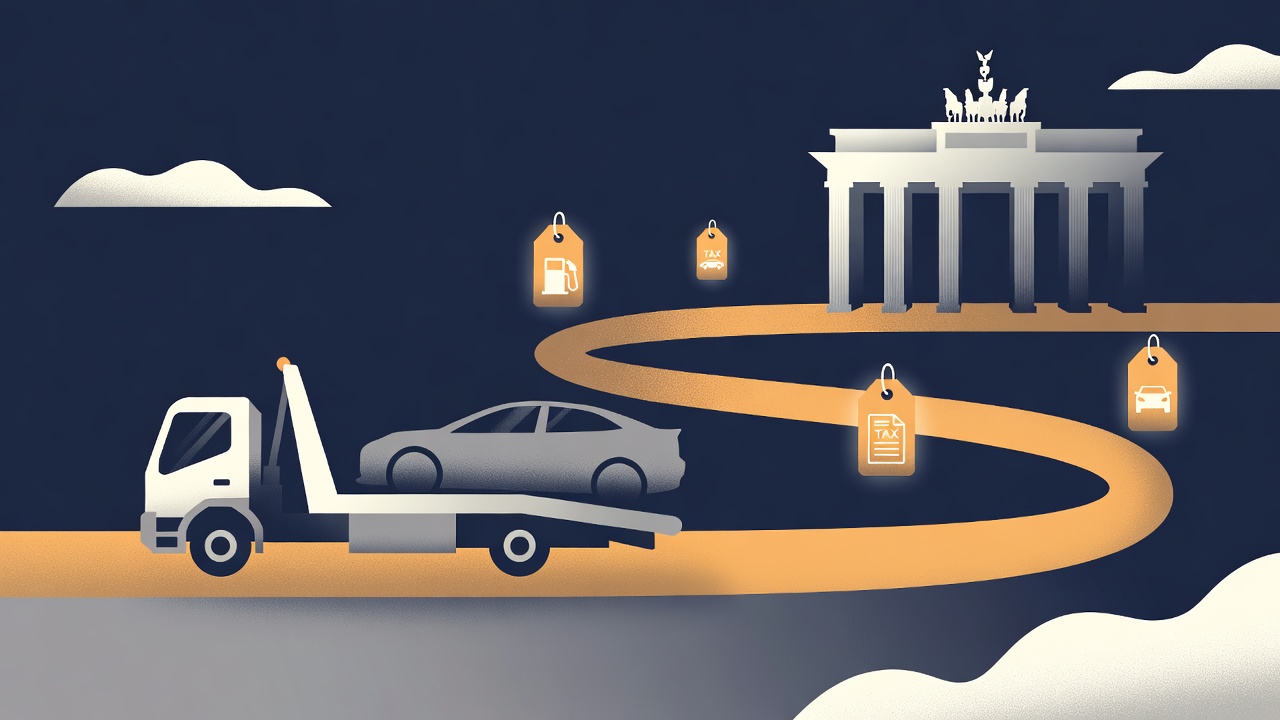
The price shown in a German listing is rarely the figure you’ll actually pay. On top of it come transport, excise duty, translations and a few official fees that are easy to forget on a first trip to fetch a car. We’ve gathered every item in one place so you can work out the cost of importing a car from Germany in 2026 before you send a deposit.
The car price and transport
The starting point is, of course, the purchase amount. Remember, though, that German sellers often quote gross prices including VAT, and when buying from a company on a VAT-margin invoice you can’t reclaim the tax. That realistically raises the cost by a good ten-plus percent over what the calculator in your head suggests.
The second big item is transport. Driving it back yourself means fuel, motorway tolls, a possible overnight stay and the risk that a car bought “blind” turns out worse than in the photos. A tow truck from around Berlin or Düsseldorf to Rzeszów is usually a few thousand złoty, but it gives you the certainty that the car arrives even with a fault.
Excise duty, the recycling fee and translations
Excise duty is payable on every passenger car imported from the EU. Its rate depends on engine capacity: up to 2.0 it’s lower, above 2.0 it clearly rises. Hybrid and electric cars are settled under separate, more favourable rules. The excise has to be paid and declared to the tax office before you register the vehicle.
On top of that comes the recycling fee, a sworn translation of the documents (registration, contract, sometimes the brief) and minor notary costs on the contract. Each of these items is small on its own, but together they can add a few hundred złoty.
Technical inspection and registration
A car imported from abroad undergoes a technical inspection in Poland as a vehicle being registered for the first time. The station checks conformity with the documents and the technical condition. Then you file the registration application: fees for plates, the registration document and the vehicle card are added. It’s also worth budgeting third-party insurance right away, because without it you won’t move off the spot.
Intermediary or on your own — what pays off
Importing on your own is tempting for the saving on the margin, but it has its price. You lose time on the trip, you risk buying a car with hidden damage or a wound-back odometer, and you take all the paperwork — excise, translations, registration — onto yourself. If you’re doing it for the first time, a costly mistake is easy.
Commissioning a dealer to bring it in makes sense when you value peace of mind and the certainty that the car was checked on the spot. With us every vehicle is verified for VIN and CEPiK history, and cars can be imported to order to your specification — a specific model, budget and equipment. Then the dealer’s margin isn’t a surcharge on a problem, it’s the price for someone taking on the risk.
Before you decide, count it all coolly: price, transport, excise, fees and your time. It often turns out that the difference between importing on your own and a ready car from a dealer is smaller than it seems. Take a look at our offer or get in touch — the Prosta Wola team in Rzeszów, Poland will help estimate the real cost of importing a specific car from Germany and advise what pays off better in your case.