How to check a used car's history in Poland before you buy
Buying a used car from Poland is one of the better deals in Europe, provided you know what you are actually buying. Clocked mileage, an undisclosed accident or finance still owing on the vehicle can quietly erase the saving. The reassuring part is that most of these risks can be checked before you part with a deposit, and much of it costs nothing. Here is how to check a used car’s history in Poland, step by step.
Start with the VIN
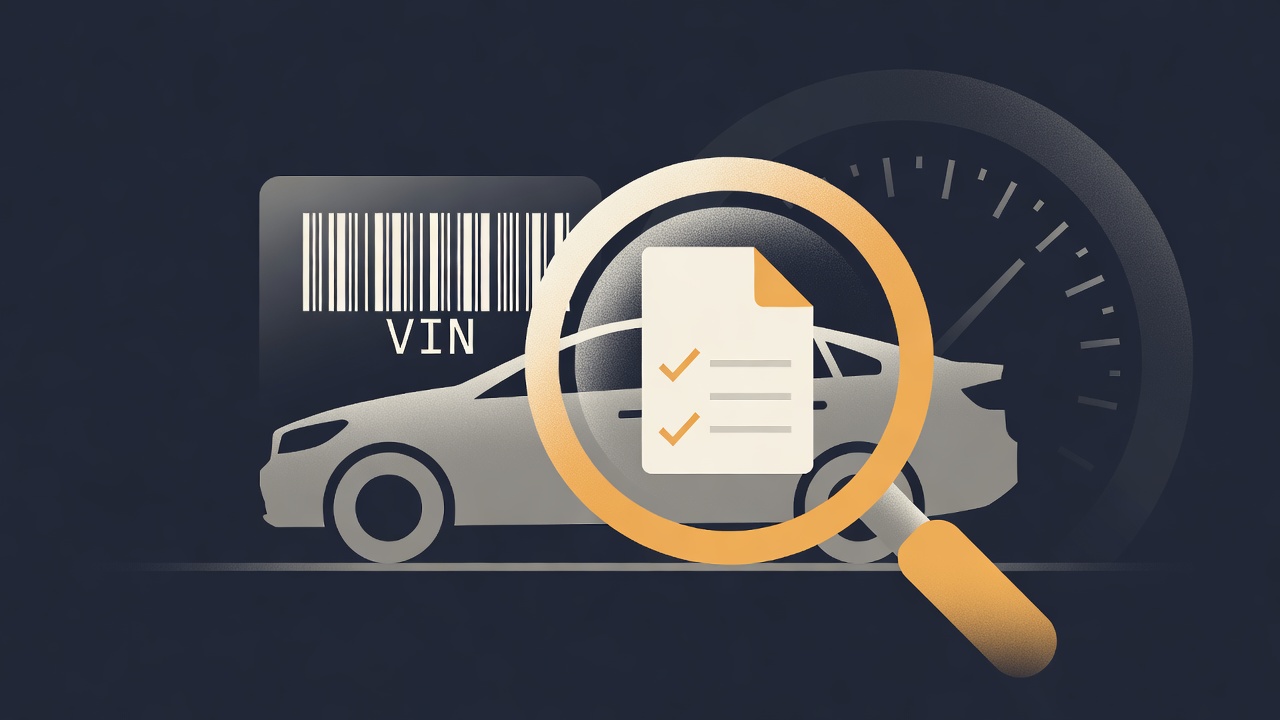
Every car carries a unique 17-character VIN. Don’t trust a single source. Cross-check the VIN in several places: stamped on the body (under the windscreen, on the door pillar), in the registration document (dowód rejestracyjny) and in the service book. Any mismatched character is a reason to slow down and ask questions rather than hand over cash.
The VIN is the key to every other check. Without it, the registers have nothing to tell you.
The free Polish register: historiapojazdu.gov.pl
Poland’s most useful free tool is the official government portal historiapojazdu.gov.pl, which draws on the national CEPiK database. Enter the VIN and it will show you, among other things:
- mileage readings recorded at periodic technical inspections — the simplest way to spot a wound-back odometer;
- the date of first registration;
- logged damage and inspection records.
If the official mileage stamps climb over the years and then the dashboard suddenly shows fewer kilometres, the clock has been tampered with. Treat this register as your starting point on every car.
Paid VIN reports for foreign history
CEPiK is strong on the car’s Polish life, but many vehicles in Poland arrive from Germany or elsewhere in Western Europe. To see what happened before the car entered Poland, a paid VIN report is worth the modest fee. These reports often surface earlier auction records, accident photos and mileage entries from the country of origin that the Polish register simply doesn’t hold.
Service records, finance and an independent inspection
Pair the data with the service book and workshop invoices. Consistent servicing at one dealer is a good sign; a car showing 200,000 km with a cabin that looks barely used is not.
Check too that the car is free of any lien or outstanding finance, or you risk a claim from a lender after the sale. Finally, the single most reliable step: an independent inspection at a workshop before you commit. On a ramp, a good mechanic spots welding, filler and repaired structural damage that no database will ever list.
Each check lowers your risk. Together they give you a near-complete picture of what you are buying, even from several countries away.
At Prosta Wola we run a VIN and CEPiK check on every car before it goes on sale, so the history is clear before your first call. Browse our stock or get in touch and we’ll talk you through what to look for on a specific car.