Duty and VAT on construction machinery from outside the EU — how to calculate it in 2026
You want to calculate the duty on imported construction machinery before you commit to a purchase. Rightly so, because this is exactly where most people get their sums wrong. We’ll walk through the logic step by step, on a concrete example, so you understand where the numbers come from and why the final total grows faster than it looks.
Where the bill starts: the customs value
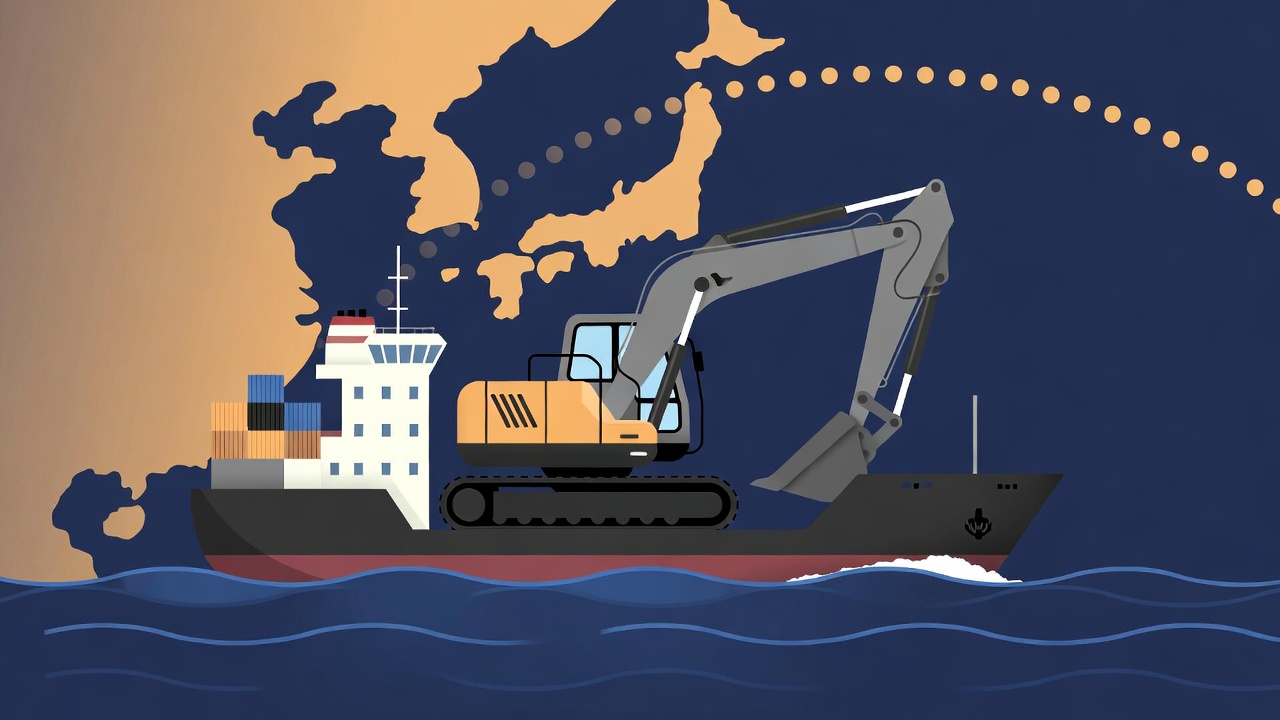
The starting point is not the price on the machine’s invoice, but the customs value. That’s the purchase price increased by the cost of transport and insurance up to the EU border. In other words, sea freight from China is included in the base on which every further charge is calculated.
This is the first point where a rough, back-of-the-envelope calculation falls apart. You count from the machine price, the office counts from a higher figure. The difference runs into hundreds, sometimes thousands.
Duty: the rate depends on the CN code
Every machine has its own tariff code in the CN nomenclature. The duty rate depends on that code. For many construction machines from outside the EU the duty is low or even zero, but you can’t assume that up front — you have to check the specific code for the specific machine.
A classification error is a real cost: the wrong duty rate, or a shipment held up pending clarification. That’s why the correct CN code is established before shipping, not after the fact at the border.
VAT at 23%: charged on everything at once
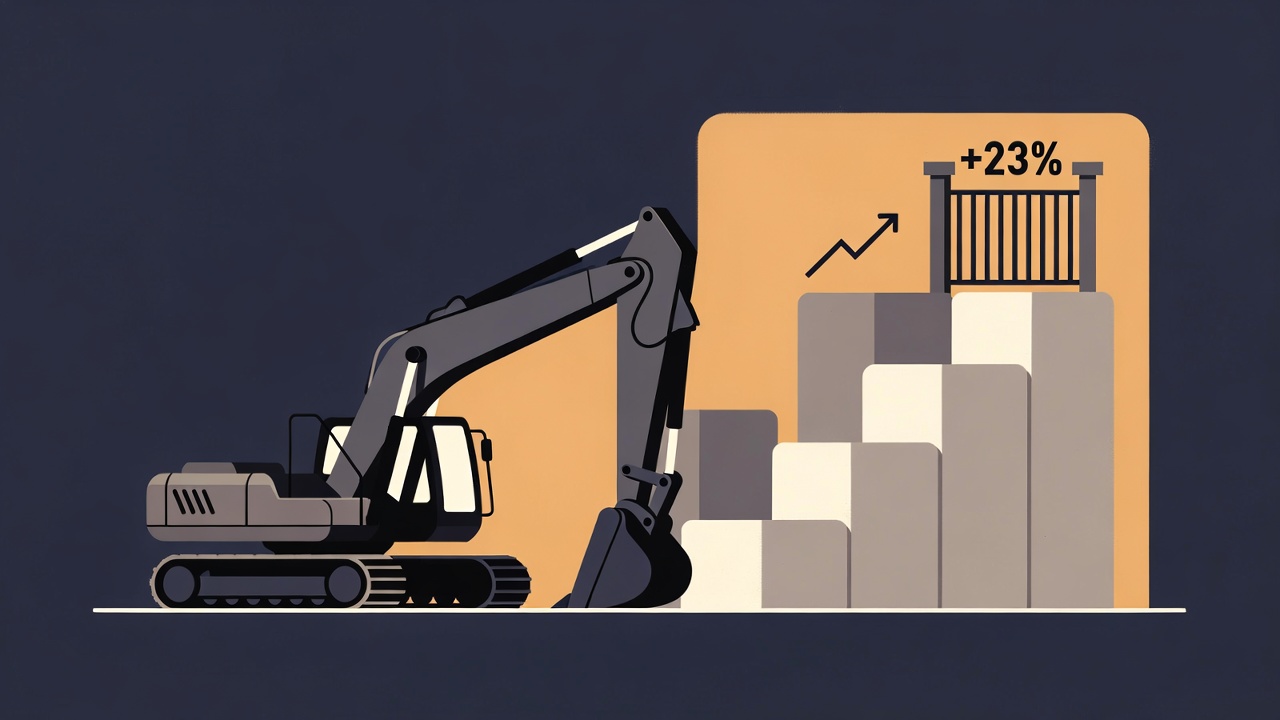
This is where the bill grows the most. Import VAT at 23% is charged not on the machine price, but on the customs value plus the duty already applied. So you pay tax on a figure that includes freight and duty.
Take a mini excavator imported from outside the EU. First the customs value: price plus freight and insurance. Then duty according to the CN code. Finally 23% VAT on the sum of those items. Each step raises the base for the next — which is why the final figure surprises anyone who only counted the machine price.
When VAT can be reclaimed
Good news for businesses: an active VAT payer normally reclaims the import VAT, so for them it’s a cash flow, not a pure cost. For a private buyer or someone VAT-exempt, that 23% is a real expense that stays in the price of the machine.
This distinction changes the economics of the whole import. Before you calculate a turnkey figure, establish your VAT status — because the same purchase looks different for a business and for a private individual.
What not to forget in the calculation
Beyond duty and VAT there are charges that are easy to overlook: the customs agency, port fees, the occasional document translation, and domestic transport from the port to the yard. Each one small on its own, together they’re another line in the budget.
The most common mistake is to add up the machine price and freight, then be surprised at clearance. The full bill is price plus freight plus duty plus VAT plus clearance plus domestic transport.
That’s why Prosta Wola quotes a single turnkey price — all those items calculated up front in one figure, with no surcharges surfacing at the border. You know what you’ll pay before anything moves. Want a duty and VAT calculation for a specific machine? As a used-machinery importer based in Rzeszów, Poland, we’ll cost the whole thing — get in touch or call +48 724 238 175. See the full catalogue of machines available to order.