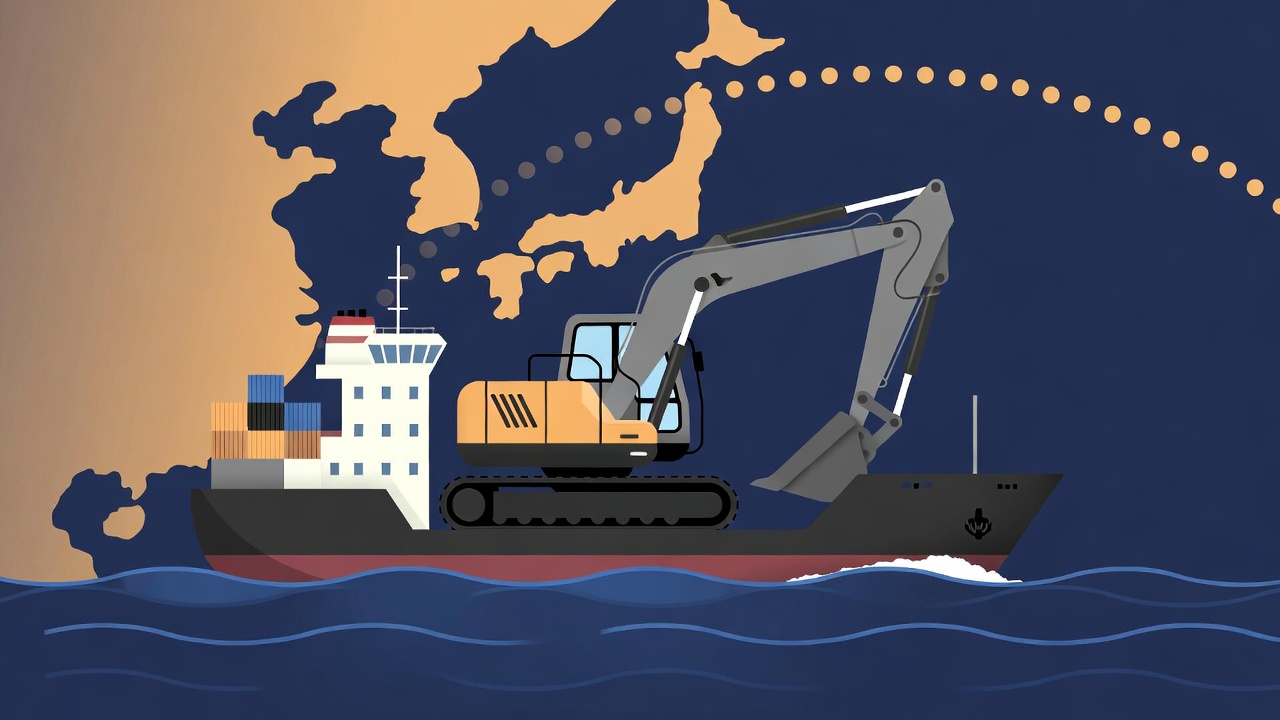
Oversized machine transport from the port to the construction site
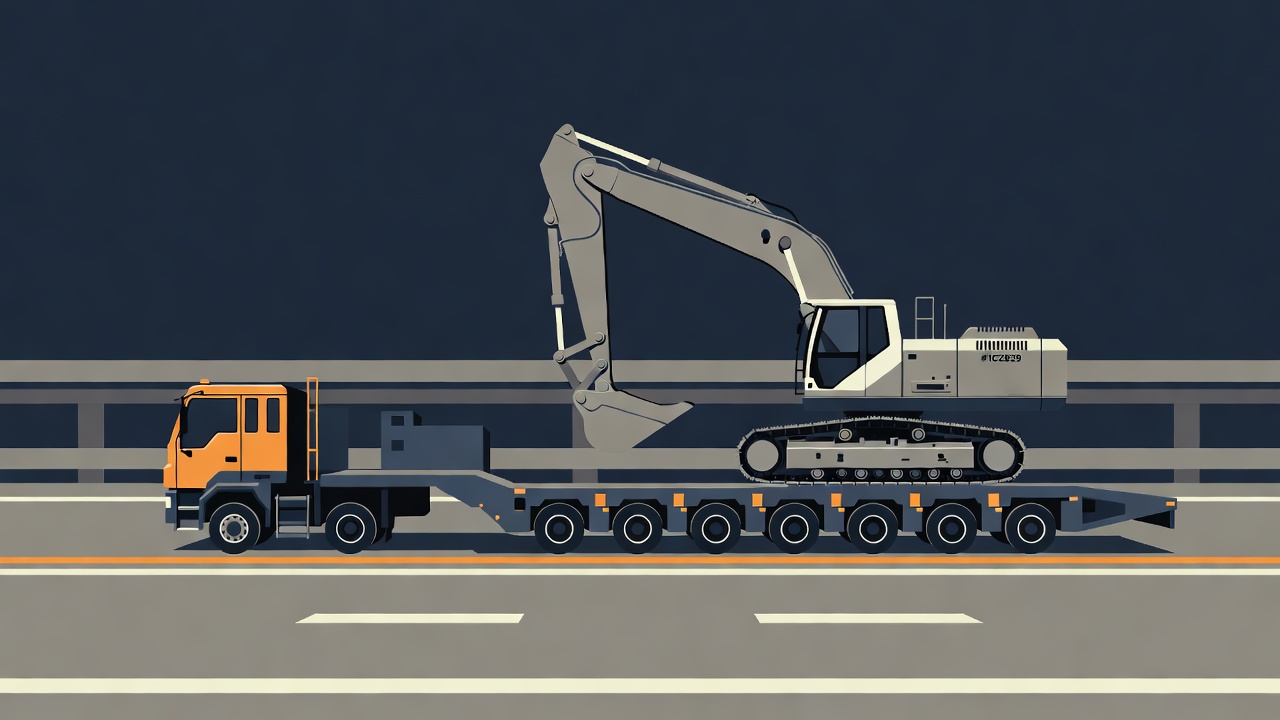
The machine has reached the port, the duty is paid — and now the question that comes up most: how do we get it to the site. Moving a construction machine on a low-bed trailer is a separate operation, not “throwing the kit on a flatbed.” Here’s what it consists of, how many items it puts on the bill, and where the mistakes happen most easily.
Is it even an abnormal load
First, the ruling that decides everything: does the machine together with the trailer exceed the limits on width, height or weight. A 20-tonne tracked excavator almost always does, so it falls under the abnormal-transport regime, with permits and restrictions.
Everything else follows from that classification: the type of trailer, the need for a permit, an escort and the allowed route. A mistake at this stage means a fine or a turned-back transport.
A trailer matched to the specific machine
A tracked machine won’t drive under its own power, so it travels on a low-bed trailer. The low deck lowers the overall height of the rig, which on tall machines can be the difference between “clears the viaduct” and “doesn’t.”
The choice of trailer depends on weight and dimensions. Heavier machines need multi-axle trailers that spread the load across the axles. This isn’t a detail — an overloaded axle is a risk of a fine and of road damage.
Permits and categories
Abnormal transport requires a permit, and its category depends on how far the rig exceeds the limits. The bigger the excess, the higher the category, the longer the wait, and the more restrictions on route and time of travel.
The permit is arranged before the transport, not during it. Trying to drive without the paperwork is a certain fine and a stopped rig. That’s why planning starts with the formalities, not with hooking up the tractor unit.
Route planning and the escort
A route for an oversized load isn’t the shortest one, it’s the one you can actually drive. It has to be checked for bridges, viaducts, roundabouts and road load-bearing capacity. Larger rigs add an escort vehicle, and very large ones two, plus possible assistance.
Sometimes the run happens at night or outside peak hours so it doesn’t block traffic. All of this lengthens the operation and raises the cost — but the alternative is a rig stuck under a viaduct that’s too low.
Loading, securing and delivery
At both ends of the route the machine has to be safely loaded and secured. A poorly secured excavator is a hazard and a risk of damage in transit. At the destination yard you need an access road and space to unload a heavy rig.
These are the items a buyer thinks about last, and they’re the ones that can stop a delivery. A narrow entrance to the yard, or ground that won’t hold the trailer, is a real problem at the finish line.
That’s why with Prosta Wola the last leg isn’t a surprise — we build the oversized transport, permits and the escort into a single turnkey price, together with the machine and duty, calculated up front. You get the kit delivered anywhere in Poland, not a list of surcharges at the port. Want a delivery quote to a specific address? Get in touch or call +48 724 238 175. Machines available to order are in our catalogue.